digia studio

Server-driven UI emerged as a response to a fundamental limitation in mobile development: the dependency on release cycles for even the smallest UI changes. By shifting UI definitions from the client to the server, applications gain the ability to render layouts dynamically without requiring app updates. This changes the role of the frontend from a fixed implementation to a flexible rendering layer that interprets data-driven configurations. As a result, teams can push updates instantly, experiment more frequently, and respond to user behavior without waiting for store approvals or user upgrades.
This shift also transforms how teams build products. Instead of embedding UI directly into code, interfaces are defined as structured data that can evolve independently of the application binary. This allows for faster iteration and a more responsive development cycle. However, while server-driven UI introduces flexibility in rendering, it does not fully solve broader challenges such as workflow coordination, governance, collaboration, and maintaining consistency across systems. It improves how interfaces are delivered, but it does not redefine how the entire product lifecycle operates.
The more significant transition lies in what can be described as the zero-release model. In this approach, applications are no longer treated as static binaries that evolve through versioned updates. Instead, they function as dynamic systems that continuously adapt without requiring user intervention. Changes are deployed and reflected in real time, removing the dependency on traditional release pipelines. This model is built on three core ideas: control over UI from the server, the ability to iterate instantly without redeployment, and centralized governance that manages access, versioning, and workflows across the system.
Within this context, Digia positions itself as more than a server-driven UI solution. It acts as an infrastructure layer that enables mobile applications to operate as continuously evolving systems. Rather than focusing solely on rendering flexibility, it integrates UI control with developer workflows, access management, and system-level design. This combination allows teams to not only update interfaces faster but also rethink how products are built, managed, and scaled over time. Its deep integration with Flutter ensures that this flexibility does not compromise performance or platform consistency, preserving the benefits of native-like experiences while enabling dynamic control.
The capabilities that support this model are interconnected and designed to enable continuous iteration without sacrificing structure. Cross-platform support ensures that a single Flutter codebase can serve both Android and iOS, eliminating duplication and allowing teams to focus on product behavior rather than platform-specific differences. Custom widgets extend the UI layer beyond predefined components, enabling teams to create reusable elements tailored to their product while maintaining consistency within the system. These widgets integrate directly into the rendering pipeline, ensuring that customization does not break the underlying architecture.
Beyond the interface layer, custom functions provide control over application logic. While UI can be dynamically defined, real-world applications require conditional flows, integrations, and data transformations that go beyond static configurations. Custom functions enable this by allowing developers to define how the system behaves under different conditions, ensuring that flexibility extends from presentation to functionality. This makes it possible to build complex, adaptive experiences without relying on constant code-level changes.
Version control becomes an integral part of this system through Git integration, bringing UI development closer to established engineering workflows. Changes to the interface are tracked, reviewed, and can be rolled back just like backend or infrastructure changes. This introduces reliability and accountability into a space that has traditionally been difficult to manage. Complementing this, role-based access control ensures that flexibility does not lead to instability. Teams can collaborate within clearly defined boundaries, with permissions controlling who can view, edit, or deploy changes across the system.
Consistency at scale is maintained through theming capabilities, which allow teams to define global design rules that propagate across the application instantly. Instead of managing styles manually across multiple screens, design decisions are centralized and enforced systematically. This reduces fragmentation and ensures that the product maintains a coherent visual identity even as it evolves rapidly.
At the core of this system is the digia_ui package, which serves as the client-side rendering engine within Flutter applications. It interprets server-defined configurations and converts them into native Flutter widgets, allowing the application to maintain performance and platform fidelity while supporting dynamic updates. The extensibility of this engine ensures that developers are not constrained by the system, as they can integrate custom widgets and logic to meet evolving product requirements.
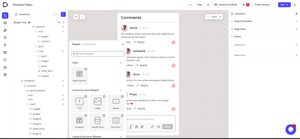
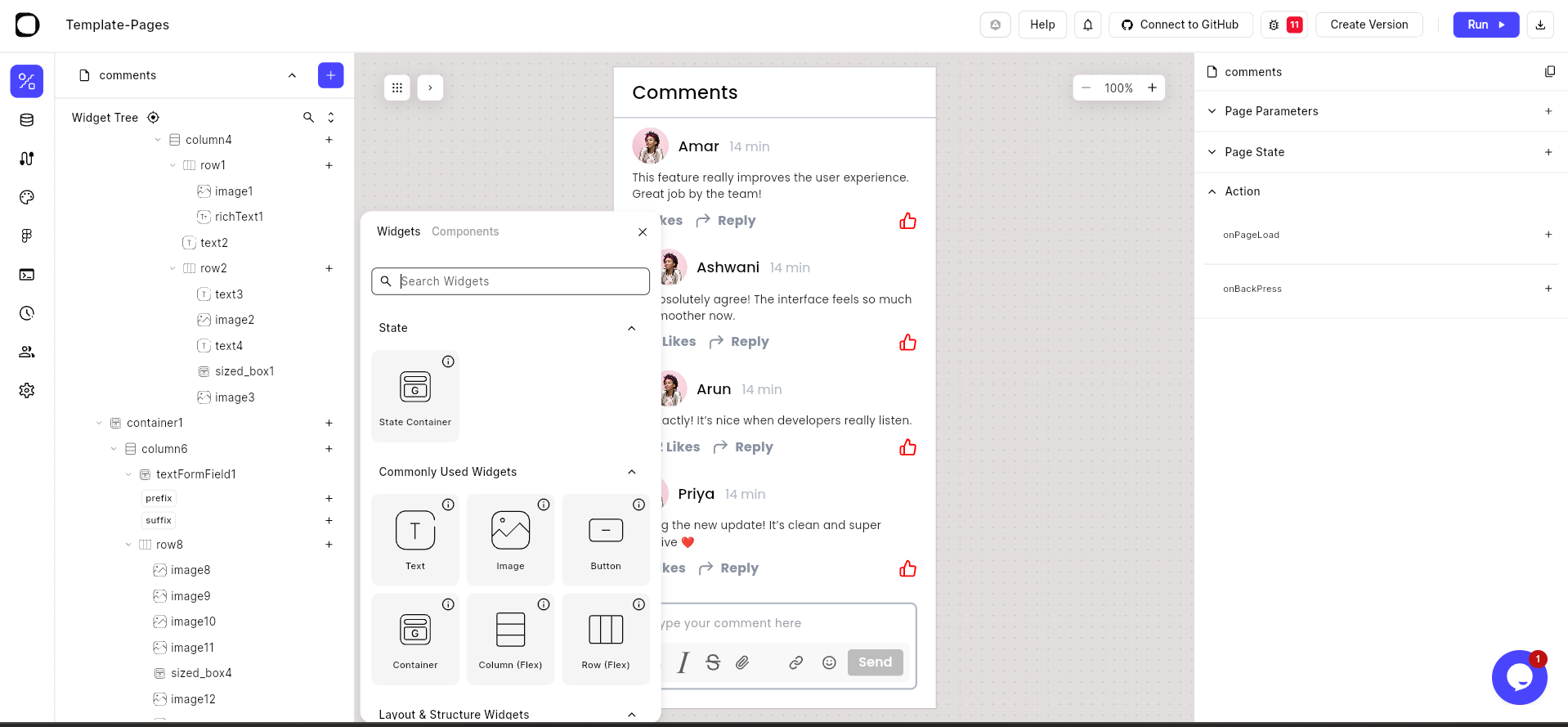
Digia Preview introduces a practical layer to this model by enabling real-time visualization of UI changes without rebuilding or redeploying the application. This fundamentally alters the feedback loop in mobile development, turning what was once a slow, iterative process into an immediate and interactive experience. Teams can experiment with layouts, behaviors, and interactions in a live environment, testing both structure and logic without touching the core build. This removes the friction associated with compilation and deployment, allowing designers and developers to collaborate more closely and iterate continuously.
The elimination of rebuild cycles leads to a shift not just in speed but in how decisions are made. When feedback becomes instant, experimentation becomes a natural part of the workflow rather than a costly step. Product evolution moves from being release-driven to being continuous, with teams able to refine experiences in real time based on insights and user behavior.
This also reshapes traditional mobile workflows, which are often fragmented across design tools, code repositories, and deployment systems. By integrating Git-based versioning and structured access control, Digia brings these elements closer together into a unified system. UI changes become part of a broader development lifecycle, aligned with modern DevOps practices. The result is a transition from a model centered around releases to one focused on continuous delivery, where updates are not events but an ongoing process embedded into how the product operates.