Visit site

Global Data Tracker

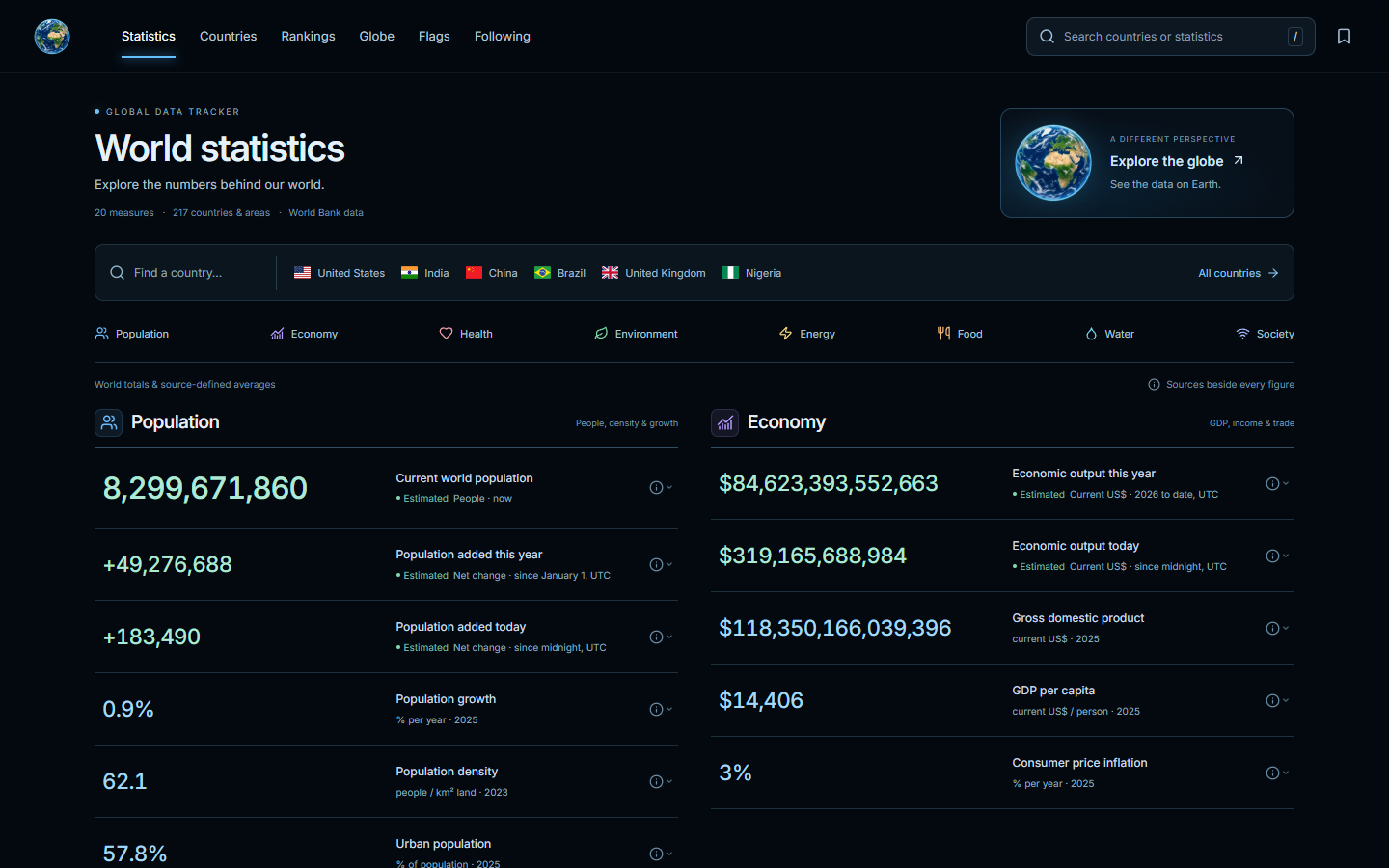
I built Global Data Tracker to make world statistics easier to explore. It has country profiles, historical charts, comparisons and rankings, plus a 3D globe you can rotate and zoom. The first version led with the globe. I recently changed the homepage to put statistics first, so a quick lookup doesn't require navigating a map. The globe is still there for exploring. It's free with no reader signup. Published figures show their sources and reporting years. Moving counters are calculated estimates, not a feed of individual events. Built with AI assistance, Next.js and WebGL, and still improving from feedback. I'd love to hear whether finding and comparing country statistics feels straightforward, especially on mobile.Global Data Tracker screenshot
Latest updates

2 November 2026
@bennyglobaldata avatar
Benny• Building Global Data Tracker: free world statistics, country comparisons, and an interactive globe.

A data-app lesson from Global Data Tracker: keep each source release intact. World Bank advises against filling a new WDI release's gaps from older editions. Compare releases separately instead of silently mixing them. https://globaldatatracker.com/methodology#Global Data Tracker

31 October 2026
@bennyglobaldata avatar
Benny• Building Global Data Tracker: free world statistics, country comparisons, and an interactive globe.

Global Data Tracker lesson: compare the latest shared year. For Japan and South Korea's health spending, that's 2023; Japan has no 2024 value. GDP share doesn't measure care quality. https://globaldatatracker.com/countries/japan?metric=health_spending_gdp#Global Data Tracker

17 October 2026
@bennyglobaldata avatar
Benny• Building Global Data Tracker: free world statistics, country comparisons, and an interactive globe.

Population at a date is a stock; births over a year are a flow. Births alone don’t show population growth: deaths and migration matter too. Check the period, geography and population definition before comparing figures. https://globaldatatracker.com#Global Data Tracker

16 October 2026
@bennyglobaldata avatar
Benny• Building Global Data Tracker: free world statistics, country comparisons, and an interactive globe.

A data-chart lesson from Global Data Tracker: keep missing observations separate from reported zeros. Before comparing ranks across years, check that the same countries have data. Label gaps and name the comparison group. https://globaldatatracker.com#Global Data Tracker

15 October 2026
@bennyglobaldata avatar
Benny• Building Global Data Tracker: free world statistics, country comparisons, and an interactive globe.

A lesson from Global Data Tracker: sources and years help readers assess a comparison, but don't guarantee matching survey scopes. Check ages, definitions and reference periods before combining country figures. https://globaldatatracker.com#Global Data Tracker

10 October 2026
@bennyglobaldata avatar
Benny• Building Global Data Tracker: free world statistics, country comparisons, and an interactive globe.

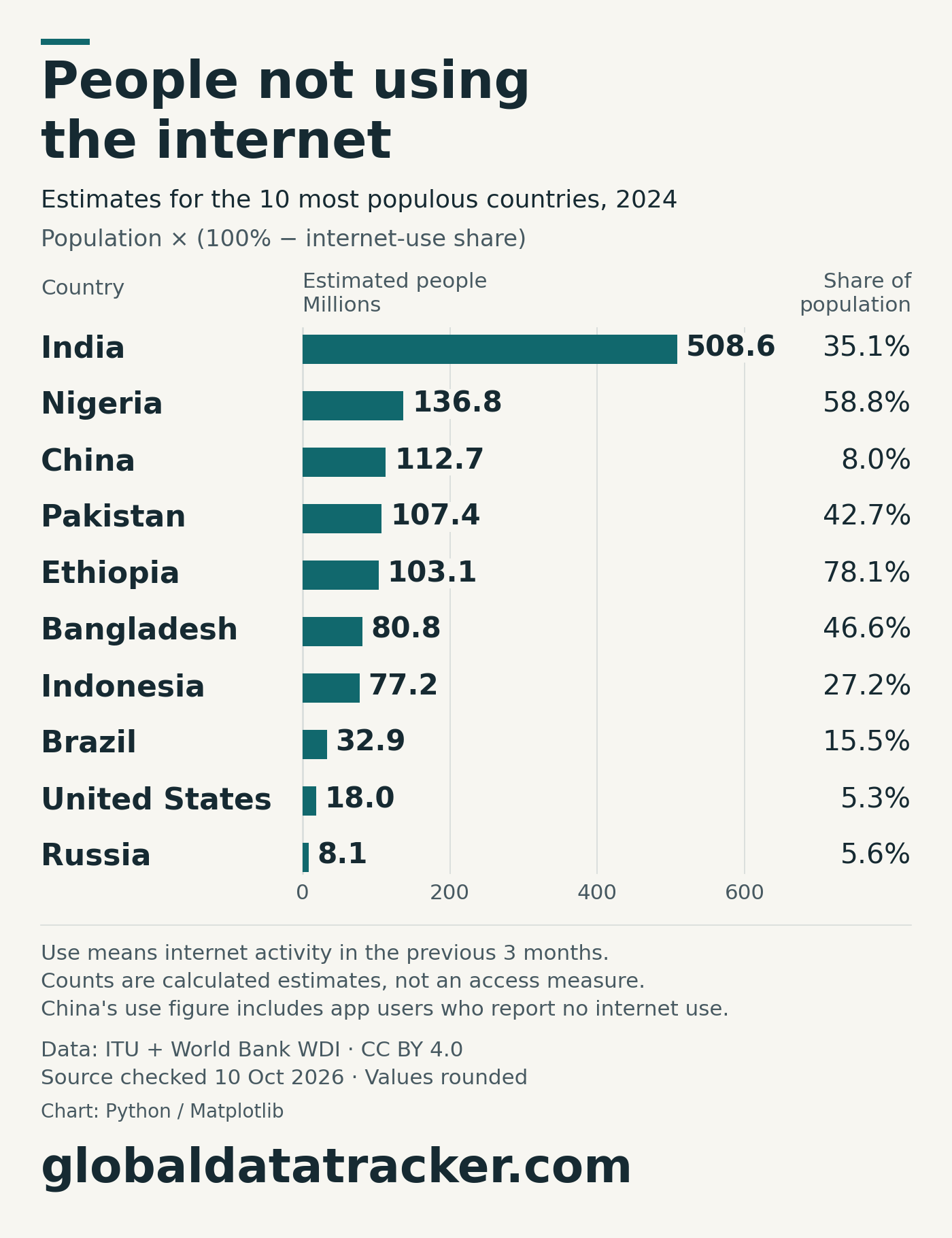
Correction: We withdrew this chart's derived non-user shares, counts and ranks. Survey ages, reference periods and population denominators weren't verified as comparable. Don't reuse these figures. ITU/World Bank: https://globaldatatracker.com/statistics/internet_use#Global Data Tracker

Image 1 from @bennyglobaldata's post
6 October 2026
@bennyglobaldata avatar
Benny• Building Global Data Tracker: free world statistics, country comparisons, and an interactive globe.

World Bank urban-majority milestones, 1960–2024, for 2024’s 10 most populous countries: Brazil 1967, Nigeria 2008, China and Indonesia 2011 (first annual estimate ≥50%). Others began above or remain below. Definitions vary. Urban population table: https://globaldatatracker.com#Global Data Tracker